
For restaurants, hotels, cafés and leisure
Hospitality
Discover night-time consumption, refrigeration, kitchen equipment, peak moments and standby consumption without a heavy consultancy project.
Pricing model
Modular per meter, confirmed after scope
Start with Consumption Analysis per meter. You only add Financial Analysis and Capacity Analysis when they add value.
 Hospitality
01
The approach
From recognizable situations to concrete data questions.
02
Sector profile
Quarter-hour values reveal peaks and baseload consumption.
03
Where the money is
Cost, capacity and anomalies come together in an action view.

The approach
From evening peak to grip on every site.
In hospitality the money is earned in a few busy hours, while refrigeration and kitchen run around the clock. COMCAM shows per site how that interplay works out: from the first espresso to the last night of refrigeration.

Recognise
Every site gets its own quarter-hour profile. In it you see the lunch build-up, the evening peak and what keeps running after closing.
Compare
Venues with a comparable formula should perform comparably. The outliers point themselves out, per part of the day and per meter.
Steer
Agreements with the manager, the installer or the landlord become measurable. You see within a week whether an intervention works.
Where hospitality often runs into trouble.
Energy Intelligence is positioned differently for each sector. The value lies in recognisable situations, not in generic dashboards.
High night-time consumption
Refrigeration and kitchen equipment
Unexplained increases
Price-sensitive operations
The energy model
Hospitality
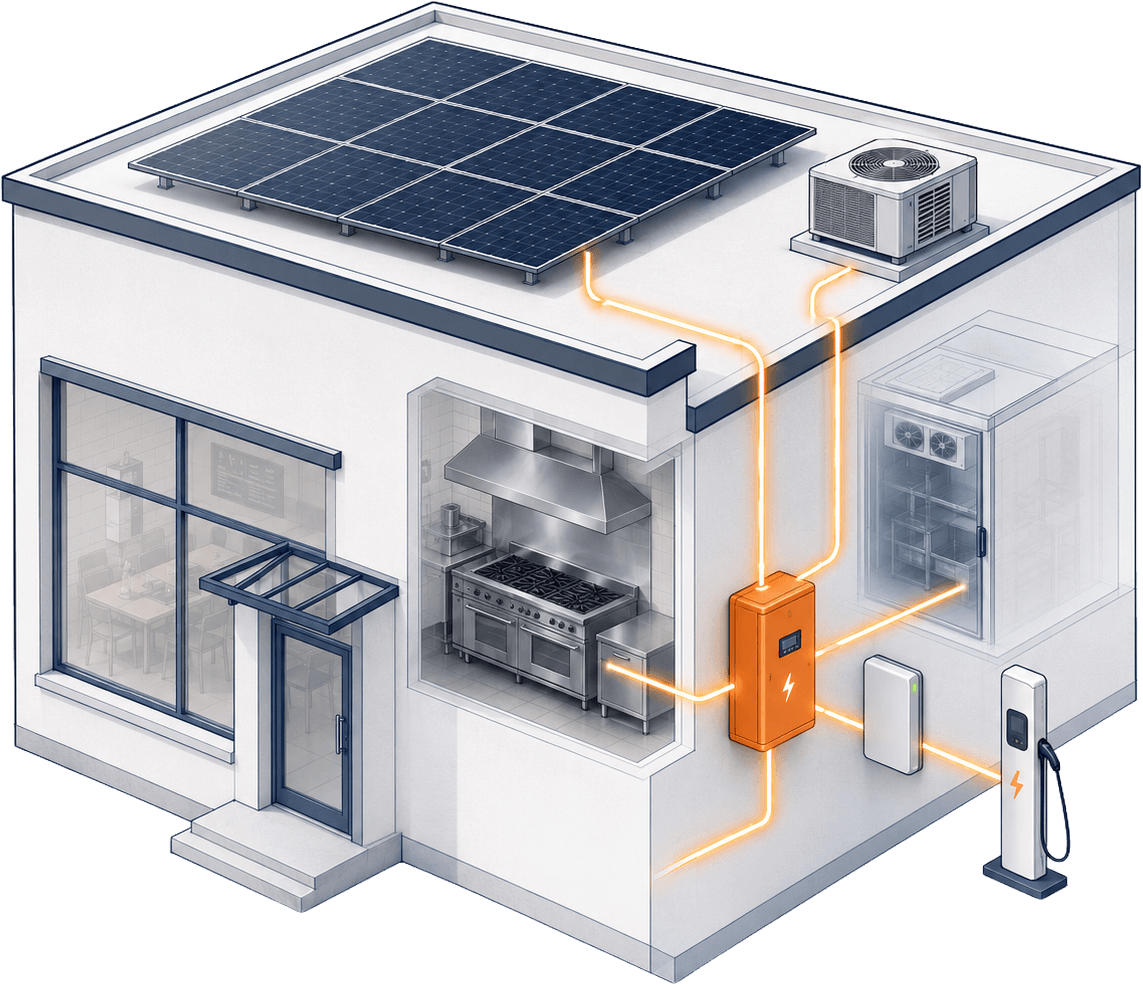
Where consumption, generation and steering come together in this sector: from meters and cooling to solar panels and charging infrastructure.
Sector profile
The hospitality profile: the evening earns the money, the night leaks it away.
Day profile in quarter-hour valuesNight-time refrigeration
Cold rooms and freezers keep running after closing. Normal, but the difference between sites reveals settings and wear.
Lunch build-up
Kitchen and dishwashing line kick in. Know the lunch and evening build-up and you spot anomalies per part of the day.
Evening peak
Kitchen, extraction and refrigeration at full power simultaneously. This is where the quarter-hour peaks arise that define your connection.
Contracted capacity
Adding equipment or a charge point? The profile shows whether the connection can handle it, before you invest.
Where the money is
Three insights that make the difference in hospitality.
Closing time is measuring time
Consumption outside opening hours should be structurally low. Every quarter-hour above the expected baseload after closing is directly attributable waste: refrigeration set too cold, extraction still running, lights left on.
Comparing sites works better than reading invoices
Two comparable venues should have comparable profiles. If one site deviates, that is where the conversation belongs: with the manager, the installer or the landlord.
The evening peak determines your contract
Not your total consumption but your highest quarter-hour determines the capacity you need. Peak during the kitchen rush and you pay for it all year.
From the field · Hospitality
Hospitality associations meet the EBS obligation
Hospitality businesses using more than 50,000 kWh of electricity or 25,000 m³ of natural gas are required to have an energy monitoring and management system (the Dutch EBS requirement). Through Energy Intelligence they meet that requirement, with insight into consumption and peak moments and the ability to control peaks.
View all casesResult
More than 50 hospitality businesses now meet the EBS obligation.
Energy Intelligence for hospitality.
Start with Consumption Analysis per meter. You only add Financial Analysis and Capacity Analysis when they add value.
Consumption Analysis
Base rate per meter for consumption, locations and trends.
Book a no-obligation callRead on in the knowledge base.
In-depth articles on exactly these questions: substantiation, practical examples and step-by-step plans.
Hospitality
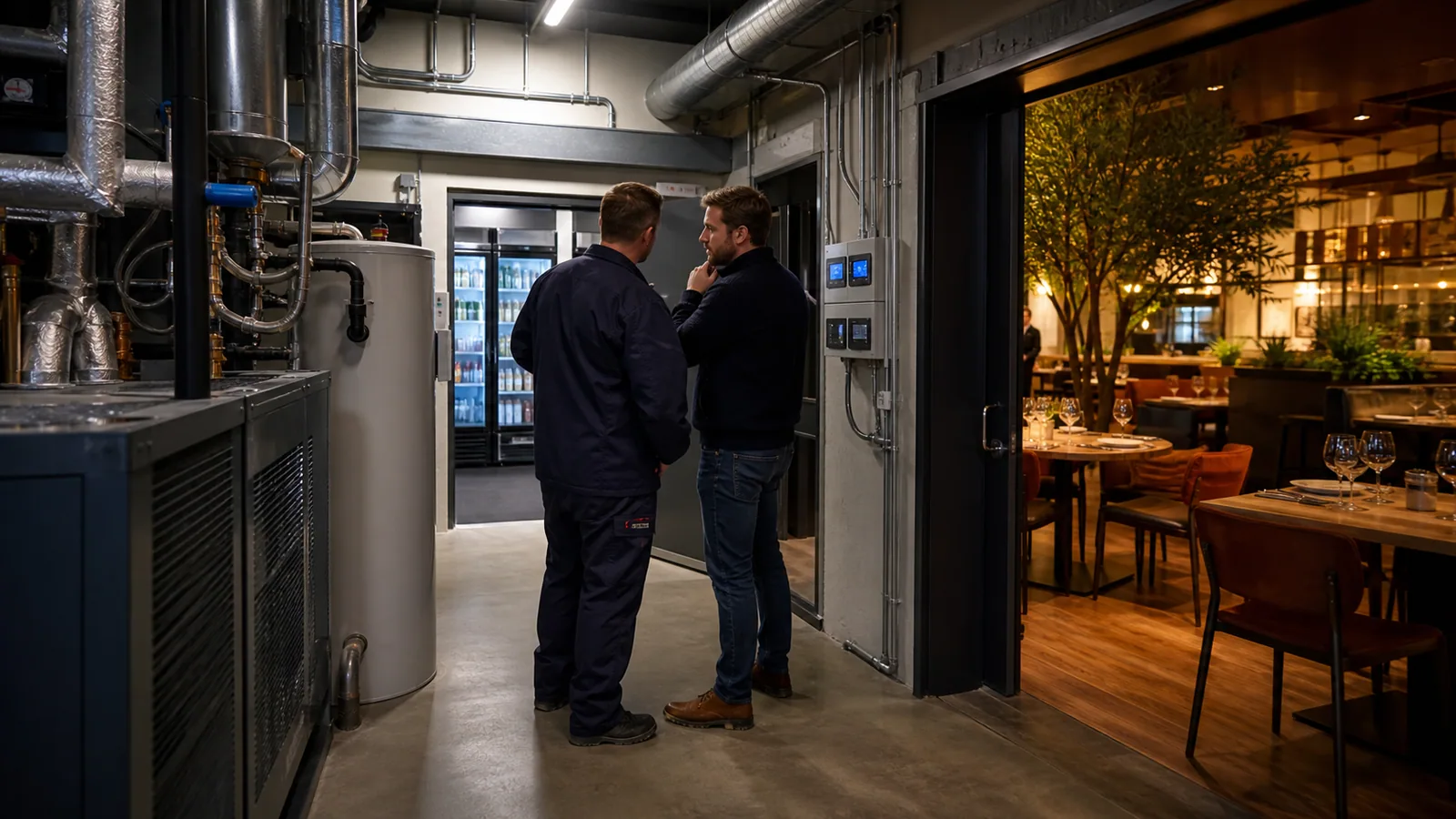
Energy management for hospitality: what should you look out for?
Energy management for hospitality revolves around night consumption, refrigeration, kitchen peaks, opening hours and differences between sites. Especially across multiple locations, central monitoring is valuable because deviations become visible quickly.
Read article
Sector: Hospitality
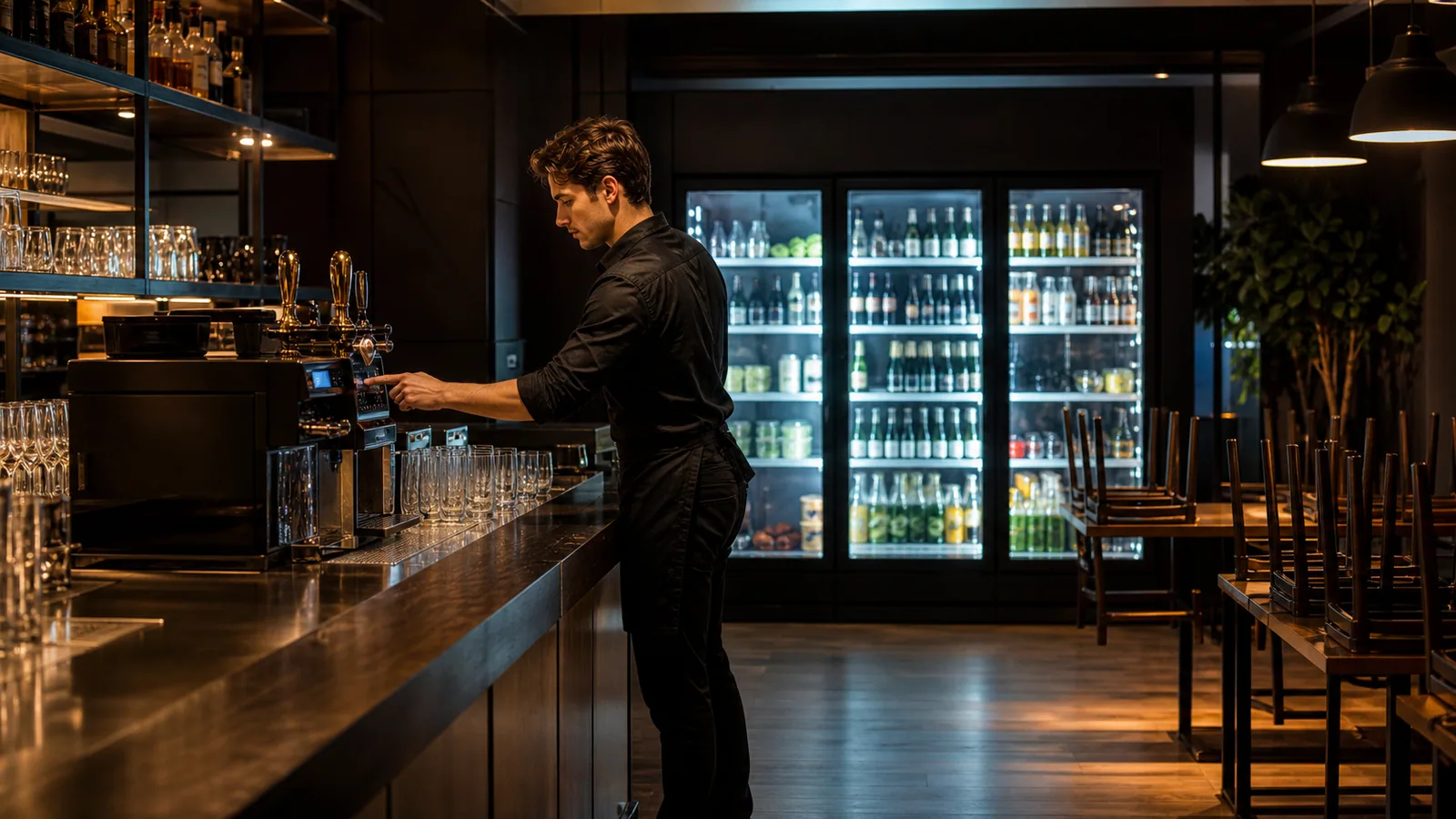
Cutting energy costs in hospitality: control per venue, from refrigeration to the closing round
You cut energy costs in hospitality by laying each venue's consumption alongside its opening hours. Refrigeration and freezer rooms rightly run day and night, but extraction, kitchen equipment and lighting belong off after the closing round. COMCAM shows per venue what keeps running outside opening hours, where service peaks arise and which site is out of step, so you intervene precisely without guests noticing a thing.
Read article
Hospitality chain
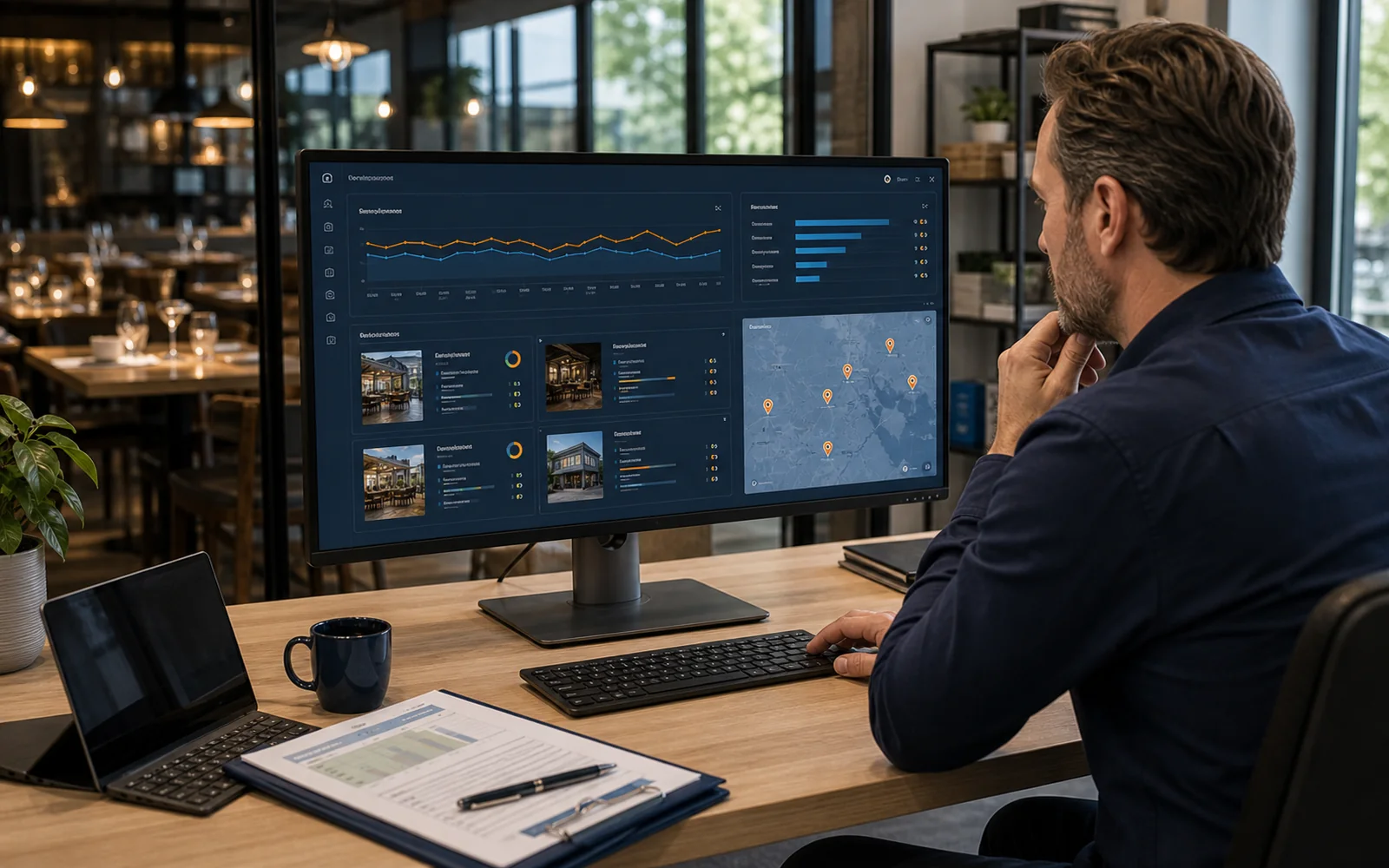
How do I manage energy across a chain of hospitality locations?
Managing energy across a hospitality chain requires central insight per location, meter and usage profile. Compare sites not only on euros, but also on opening hours, kitchen load, refrigeration, peaks and anomalous night consumption.
Read article
Frequently asked questions about energy insight in hospitality.
From metering data and savings opportunities to capacity, regulation and a practical start.
01Where is the first measurable saving opportunity in hospitality?
Closing time is measuring time. Consumption outside opening hours should be structurally low. Every quarter-hour above the expected baseload after closing is directly attributable waste: refrigeration set too cold, extraction still running, lights left on.
02Which deviations and decisions become visible through comparison in hospitality?
Comparing sites works better than reading invoices. Two comparable venues should have comparable profiles. If one site deviates, that is where the conversation belongs: with the manager, the installer or the landlord.
03Which strategic decision can the energy profile substantiate?
The evening peak determines your contract. Not your total consumption but your highest quarter-hour determines the capacity you need. Peak during the kitchen rush and you pay for it all year.
04Which patterns appear in the energy profile of hospitality?
Night-time refrigeration: Cold rooms and freezers keep running after closing. Normal, but the difference between sites reveals settings and wear. Lunch build-up: Kitchen and dishwashing line kick in. Know the lunch and evening build-up and you spot anomalies per part of the day.
05How does capacity analysis support expansion or electrification?
Adding equipment or a charge point? The profile shows whether the connection can handle it, before you invest. COMCAM compares quarter-hour values with contracted capacity, so additional demand can be assessed before investment decisions are made.
06Which energy data does COMCAM need for hospitality?
The foundation consists of quarter-hour values per meter and location. Where available, COMCAM adds gas data, contracted capacity, tariffs, operating hours and relevant asset data. Access is arranged through authorisation or an existing data connection.
07Are additional sensors or submeters always required?
No. Existing smart meters and telemetry data are the logical starting point. Submetering is only added where the main profile cannot answer a specific process question with sufficient precision.
08Which Dutch energy-saving obligations may apply to a location?
In the Netherlands, the energy-saving obligation currently applies from 50,000 kWh of electricity or 25,000 m³ of natural-gas equivalent per location per year. Measures with a payback period of no more than 5 years must be implemented. An extension to 7 years is intended for 1 July 2027, but the five-year threshold remains in force until the change is final. The exact obligation depends on the location, use and activity.

Get in touch
Let your energy data work for you.
Book a no-obligation call. We discuss your energy question, look at your own metering data and whether structural insight adds value.
- Response within one working day
- Dashboard with your own data
- Supplier-independent
- No commitments