
Hospitality chain
Article 20 of 20 · Sector-specific softwareEnergy monitoring for a hospitality chain
Direct answer
Energy monitoring for a hospitality chain brings consumption, cooling, kitchen peaks and night-time use of all sites together in a central view. This lets you see immediately which site deviates and where adjustment delivers the most, regardless of supplier or contract.
- All sites in one central view
- Cooling and night-time use per site
- Compare peaks and costs
- Supplier-independent
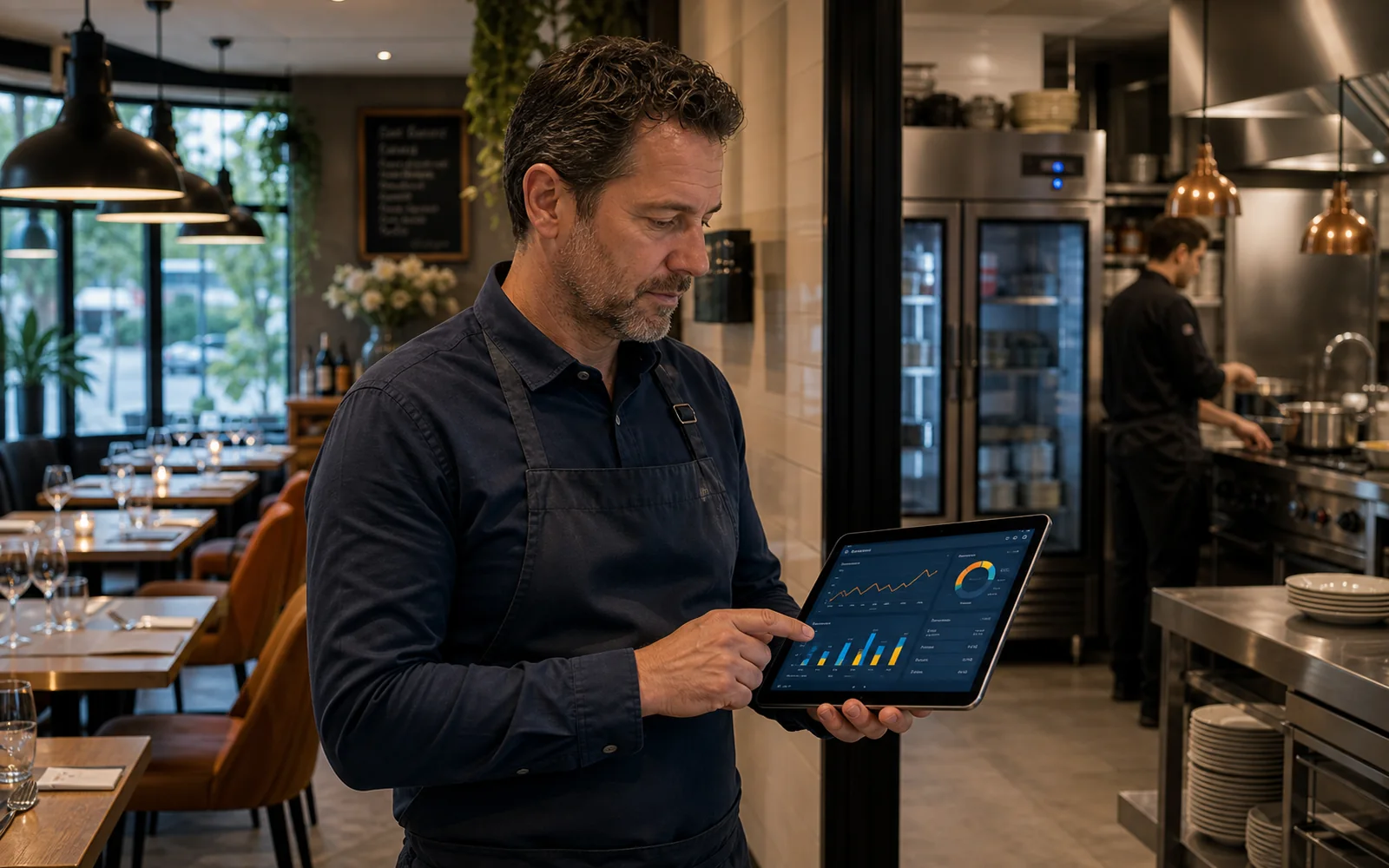
Standalone site control versus central monitoring
A growing hospitality chain quickly loses its overview: each site has its own opening hours, cooling, kitchen load and invoices. With COMCAM's energy monitoring, all sites stand side by side, so chain managers, facility and finance can steer from the same view. The pricing model is modular and indicative: you start with Consumption Analysis at a fixed price per meter per month and optionally expand with Financial Analysis or Capacity Analysis, each at a fixed surcharge per meter.
Key points
Overview
Traditional approach
Each site checks its own portal or invoices.
Modern approach
All sites continuously visible in one central view.
Detection
Traditional approach
Problems only become visible when a high invoice arrives.
Modern approach
Atypical night-time use, cooling and peaks signalled immediately.
Steering
Traditional approach
Actions depend on individual site managers.
Modern approach
Chain, facility and finance steer from a shared view.
What do you monitor per site?
Per site you track consumption at quarter-hour level, cooling, kitchen peaks, night-time use and costs. By normalising sites on opening hours, floor area or kitchen type, you compare fairly and spot outliers faster.
- Quarter-hour values per main and intermediate meter.
- Cooling and kitchen as separate consumers.
- Night-time use and standby consumption per site.
- Cost and contract context per site.
Why continuous monitoring pays off
A hospitality chain changes constantly: new sites, a different menu, replaced equipment. Continuous monitoring shows whether savings keep working and signals new deviations before they appear on the invoice.
- Alerts on atypical consumption.
- Monthly reporting per site.
- Recognise new peaks faster.
- Track the effect of measures.
Curious what this looks like with your own data?
In a no-obligation call, a specialist looks at your meters, sites and energy questions with you. Response within one business day.
Where this adds value directly
Benchmark
Compare sites on fair KPIs.
Deviations
Trace night-time use and cooling issues.
Costs
Steer costs and contract impact per site.
Frequently asked questions
Practical answers to common questions about this topic.
Question not covered here?
Ask a specialist directly. You will get a response within one business day.
Ask your questionDoes energy monitoring work with different energy suppliers?
Yes. COMCAM is supplier-independent, so you monitor all sites in one view, regardless of which supplier or contract applies per site.
What does energy monitoring for a hospitality chain cost?
The pricing model is modular and indicative. You start with Consumption Analysis at a fixed price per meter per month and optionally expand with Financial Analysis or Capacity Analysis, each at a fixed surcharge per meter. We determine the exact scope together.
Must every site have the same meters?
No. You can start with main meters and later refine with intermediate meters for cooling, kitchen or HVAC where that adds value.
What is the core of energy monitoring hospitality chain?
Energy monitoring for a hospitality chain brings consumption, cooling, kitchen peaks and night-time use of all sites together in a central view. This lets you see immediately which site deviates and where adjustment delivers the most, regardless of supplier or contract.
What data do I need for energy monitoring hospitality chain?
Start with quarter-hour meter data, invoices, contract data and site characteristics. That makes energy monitoring hospitality chain concrete, comparable and easier to follow up, rather than just a separate report.
When does this topic become relevant for my organisation?
As soon as it touches costs, grid capacity, reporting or daily operations. Also consider related themes such as energy monitoring hospitality, track energy consumption hospitality sites and monitor energy hospitality chain.
Series · Sector-specific software
All 20 articlesSearch the knowledge base
Find the answer to your question.
Search using your own words. Abbreviations and spelling variants are recognised, so EMS also finds the articles on energy management systems.
Topic
Useful next steps
Curious what this means for your organisation?
Book a no-obligation call and discover it with your own energy data.