
Hospitality
Article 1 of 20 · Sector-specific softwareHow do I save energy in my restaurant or hospitality venue?
Direct answer
Saving energy in hospitality starts with insight into night consumption, cooling, kitchen equipment, ventilation, peaks and opening hours. It is precisely outside busy hours that unnecessary consumption often arises, which monitoring makes visible faster.
- Make night consumption visible
- Track cooling and kitchen equipment
- Recognise peaks around service
- Start with a low threshold
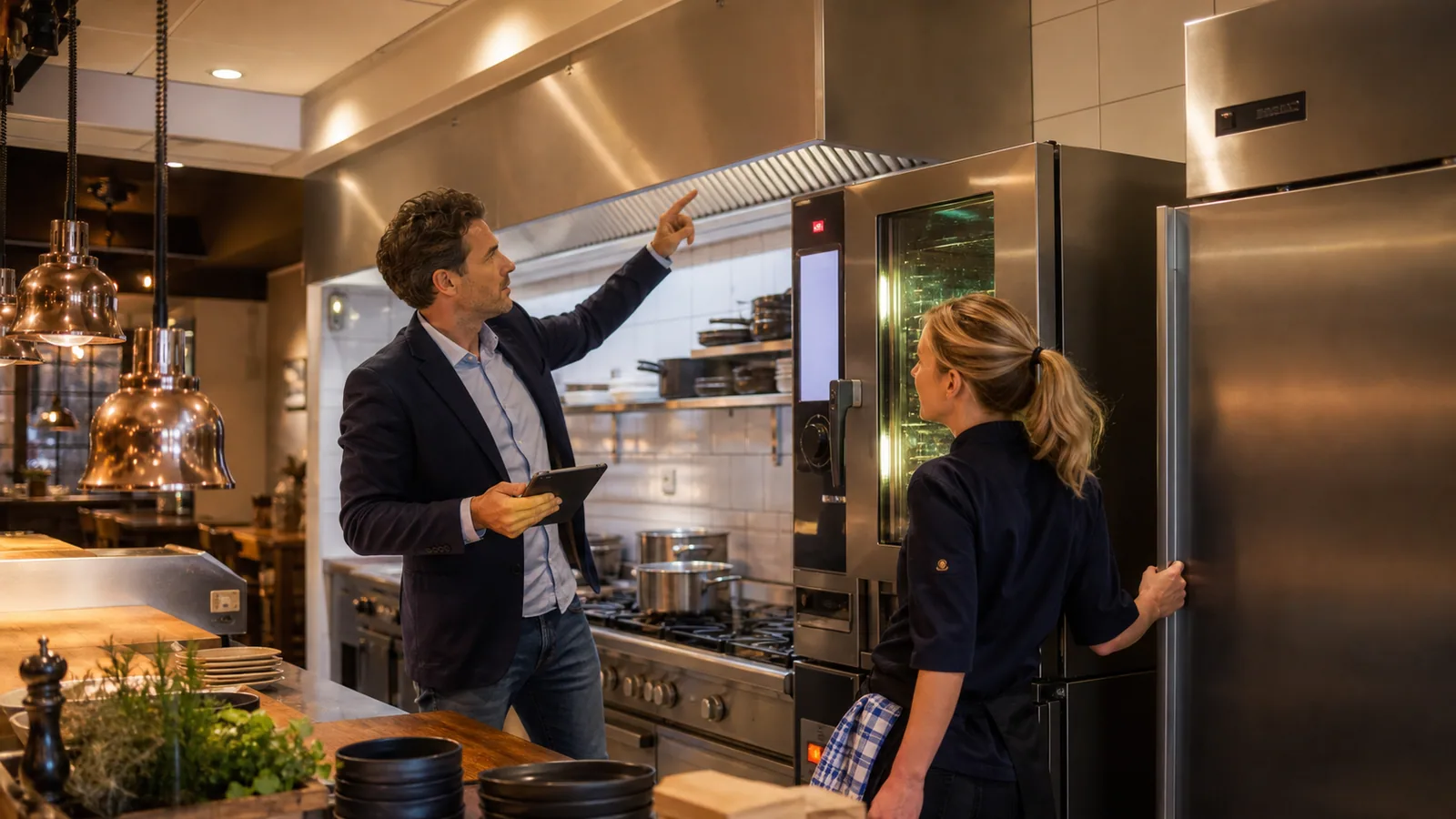
Generic saving tips versus data-driven hospitality insight
Hospitality venues have intensive equipment and varying occupancy. As a result, energy consumption is not always easy to explain. A dashboard with your own metering data reveals which moments and appliances need attention.
Key points
Approach
Traditional approach
Apply generic tips.
Modern approach
Analyse your own consumption patterns.
Focus
Traditional approach
Assess appliances in isolation.
Modern approach
Combine opening hours, peaks and night consumption.
Follow-up
Traditional approach
One-off check.
Modern approach
Monitoring and alerts on anomalies.
Where do opportunities often lie?
Many opportunities stay hidden: cooling running continuously, ventilation settings, equipment on standby or peaks around kitchen moments.
- Check night consumption.
- Monitor cooling and freezers.
- Recognise kitchen peaks.
- Compare consumption after closing.
Why your own data matters
No two hospitality venues are alike. Your own metering data shows whether measures are relevant for your opening hours, equipment and occupancy.
- View consumption by time of day.
- Compare quiet and busy days.
- Recognise atypical weeks.
- Track the effect of measures.
Cooling as the biggest continuous consumer
Cooling and freezing installations run day and night and are, in many hospitality venues, the biggest hidden cost. A poorly closing door, a fouled condenser or a wrong setting barely stands out without metering data, yet adds up significantly over the year. By tracking cooling as a separate consumer, abnormal behaviour becomes visible faster.
- Track cooling consumption per day.
- Recognise anomalies after closing time.
- Spot faulty or outdated cooling faster.
- Measure the effect of settings or maintenance.
Curious what this looks like with your own data?
In a no-obligation call, a specialist looks at your meters, sites and energy questions with you. Response within one business day.
Where this adds value directly
Night consumption
See what keeps running outside opening hours.
Costs
Link consumption to energy costs.
Sites
Compare multiple hospitality venues or branches.
Frequently asked questions
Practical answers to common questions about this topic.
Question not covered here?
Ask a specialist directly. You will get a response within one business day.
Ask your questionWhat is often the biggest energy guzzler in hospitality?
It varies per venue, but cooling, kitchen equipment, ventilation and night consumption are often important points of attention.
Do I need expensive hardware?
Not always. An initial analysis can often start with smart meter data. Detailed measurement can be added in a targeted way later.
What is the core of save energy restaurant hospitality venue?
Saving energy in hospitality starts with insight into night consumption, cooling, kitchen equipment, ventilation, peaks and opening hours. It is precisely outside busy hours that unnecessary consumption often arises, which monitoring makes visible faster.
What data do I need for save energy restaurant hospitality venue?
Start with quarter-hour meter data, invoices, contract data and site characteristics. That makes save energy restaurant hospitality venue concrete, comparable and easier to follow up, rather than just a separate report.
When does this topic become relevant for my organisation?
As soon as it touches costs, grid capacity, reporting or daily operations. Also consider related themes such as save energy hospitality, night consumption hospitality and restaurant energy consumption.
Series · Sector-specific software
All 20 articlesSearch the knowledge base
Find the answer to your question.
Search using your own words. Abbreviations and spelling variants are recognised, so EMS also finds the articles on energy management systems.
Topic
Useful next steps
Curious what this means for your organisation?
Book a no-obligation call and discover it with your own energy data.