
Metering data
Article 4 of 10 · SMEs, dashboards and controlDo I need expensive sensors to save energy?
Direct answer
Expensive sensors are not always needed to save energy. Often you can start with smart meter data, quarter-hour values and site context. Additional sensors or submetering only become sensible when you want to explain a specific process, machine or installation separately.
- Use existing data first
- Deploy hardware purposefully
- Avoid unnecessary sensor investments
- Submetering where it adds value
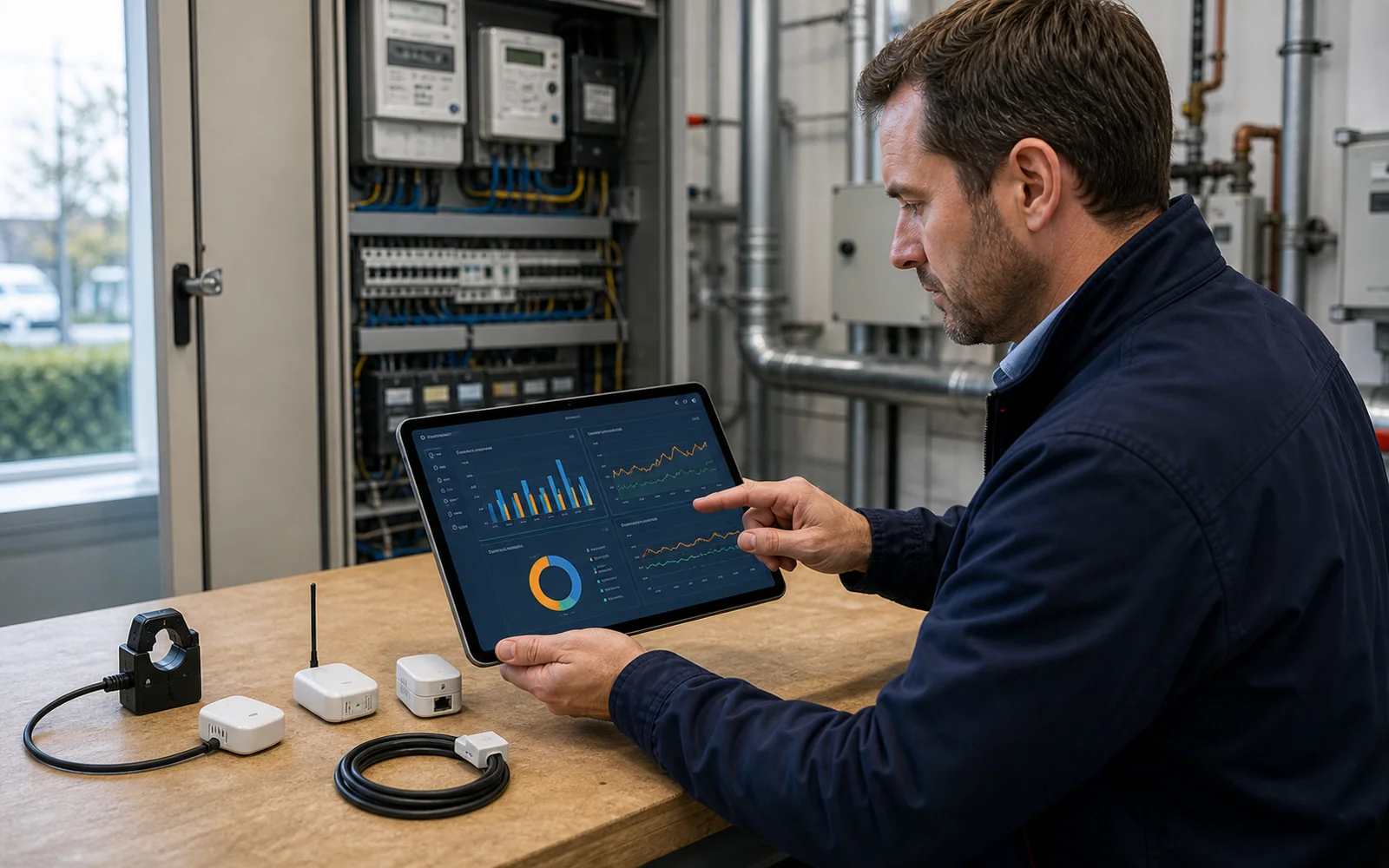
Installing sensors first versus analysing data first
Many organisations think energy saving starts with extra hardware. Sometimes that is true, but often the first value already lies in existing data. By finding patterns and anomalies first, you can deploy sensors more purposefully.
Key points
Start
Traditional approach
Buy extra hardware right away.
Modern approach
Analyse existing metering data first.
Costs
Traditional approach
More investment upfront.
Modern approach
More precisely determine where detailed measurement is needed.
Insight
Traditional approach
Lots of detail, but possibly little priority.
Modern approach
First determine which questions matter.
When are sensors not needed?
If smart meter data reveals enough patterns, you can already start with night consumption, peaks, site comparison and cost analysis.
- Quarter-hour values are available.
- The question concerns the whole site or meter.
- Initial anomalies have not yet been investigated.
- The budget must stay limited.
When are sensors worthwhile?
Sensors become worthwhile when you want to know, within a building or process, which machine, installation or zone is responsible for consumption.
- Process or machine level is needed.
- Multiple installations sit behind one meter.
- Measures require proof at a detailed level.
- Real-time control is being considered.
Curious what this looks like with your own data?
In a no-obligation call, a specialist looks at your meters, sites and energy questions with you. Response within one business day.
Where this adds value directly
Initial analysis
Use available meter data first.
Submetering
Install hardware only where deeper insight is needed.
Investment
Justify sensor costs with concrete questions.
Frequently asked questions
Practical answers to common questions about this topic.
Question not covered here?
Ask a specialist directly. You will get a response within one business day.
Ask your questionCan I save with smart meter data alone?
Often yes. Smart meter data can already reveal peaks, night consumption and anomalies.
When should I consider submetering?
When you cannot explain the cause behind a meter and need detail at machine or installation level.
Can a care facility save without investing directly in sensors?
Often yes. Healthcare property usually already has smart meter data per site. This already reveals night consumption, continuously running climate and cooling installations, peaks and differences between buildings. Only when you want to explain a specific department, operating room, server room or installation separately does targeted submetering become sensible. This keeps the first investment limited and vendor-independent.
What is the core of expensive sensors needed to save energy?
Expensive sensors are not always needed to save energy. Often you can start with smart meter data, quarter-hour values and site context. Additional sensors or submetering only become sensible when you want to explain a specific process, machine or installation separately.
What data do I need for expensive sensors needed to save energy?
Start with quarter-hour meter data, invoices, contract data and site characteristics. That makes expensive sensors needed to save energy concrete, comparable and easier to follow up, rather than just a separate report.
When does this topic become relevant for my organisation?
As soon as it touches costs, grid capacity, reporting or daily operations. Also consider related themes such as save energy without sensors, submetering needed and smart meter data.
Series · SMEs, dashboards and control
All 10 articlesSearch the knowledge base
Find the answer to your question.
Search using your own words. Abbreviations and spelling variants are recognised, so EMS also finds the articles on energy management systems.
Topic
Useful next steps
Curious what this means for your organisation?
Book a no-obligation call and discover it with your own energy data.